
Copied from the Patricia Kinard Sellers historical archives.
Brief History of Woodstock and Green Pond, Alabama Schools
The Academy was a transition school between the Latin grammar school and the American high school beginning in the year 1750 and extending to 1900. Bibb County can boast of seven schools which performed a credible educational task and filled a prominent place in the life of the various communities in which they were located.
Early records show that the Green Pond and Woodstock each had an Academy in the late 19th and early 20th century. There are few records of the Green Pond Academy that survived but it is known that it served school children from Woodstock and Green Pond from 1852 to 1866.
The building was erected by the Sons of Temperance, a pioneer society, whose purpose was to combat the whiskey evil. The name of the only teacher known to us, who taught in this building was Mr. Merriweather.
Recognition should be given to the Masons of Alabama, who have always given encouragement and practical aid to the education of the children of the state. Prior to the War Between the States a number of Mason lodges founded and gave financial support to schools. In the year 1851 the Coldwater Lodge number 145 was founded at Green Pond. The charter was granted on December 4, 1851 the lodge was named from the spring in Green Pond that gives forth unusually cold water. The primary objective of the lodge was to promote education. The families of the March 20, 1851 meeting carried the following resolutions.
Whereas Masonry has been and is an eminent instrument in affecting moral and intellectual reform, when such as practicable, and when the instruction has been duly appreciated, rearing with the tender care of parent the raising generation and advancing their interest in life, and Whereas we deem a school permanently located at this point conducive to the happening of interest of Masonry, Therefore, be it resolved that the establishment of a permanent school at this point is and shall be one of the primary objects of this lodge. Resolved second, that the funds of this lodge apart from necessary expenses, be appropriated to building a School House and the Lodge Room at Green Pond till half the amount necessary for this building be raised.
The next resolution to the building of the Academy is found in the minutes of the April 19, 1851 meeting which state:
The resolution selected to Masonic Lodge and Academy were taken from the table. Mr[s?]. Davis moved the amendment of the resolution by insisting $200 as the amount be contributed by the Lodge. Upon called of yeas and nays the motion to amend was not sustained. Upon motion, the resolutions were again laid upon the table until the next regular communication.
At the meeting of the Cold Water Lodge, May 17, 1851, the second resolution was amended. The Lodge specified $250 would be appropriated for the building of the Academy and the Lodge Room. The members of the Lodge appointed to the building committee were R. Oldham, Law, Davis, McMath and Tatum.
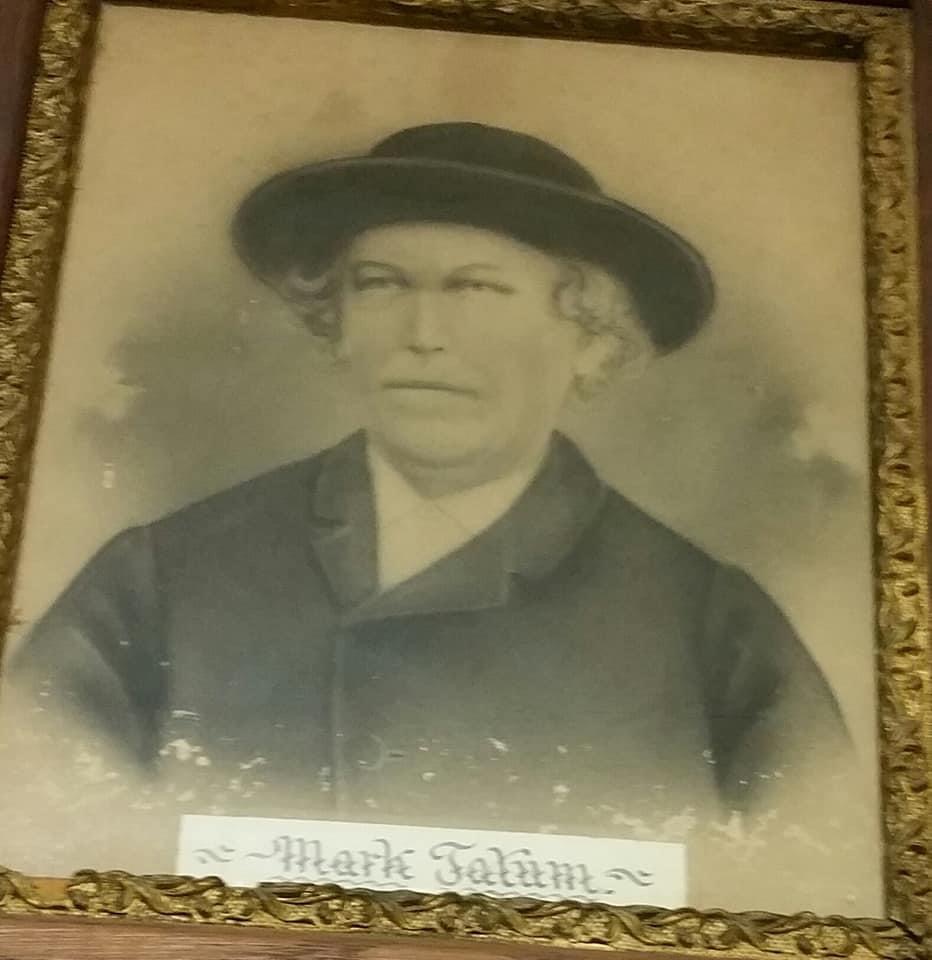

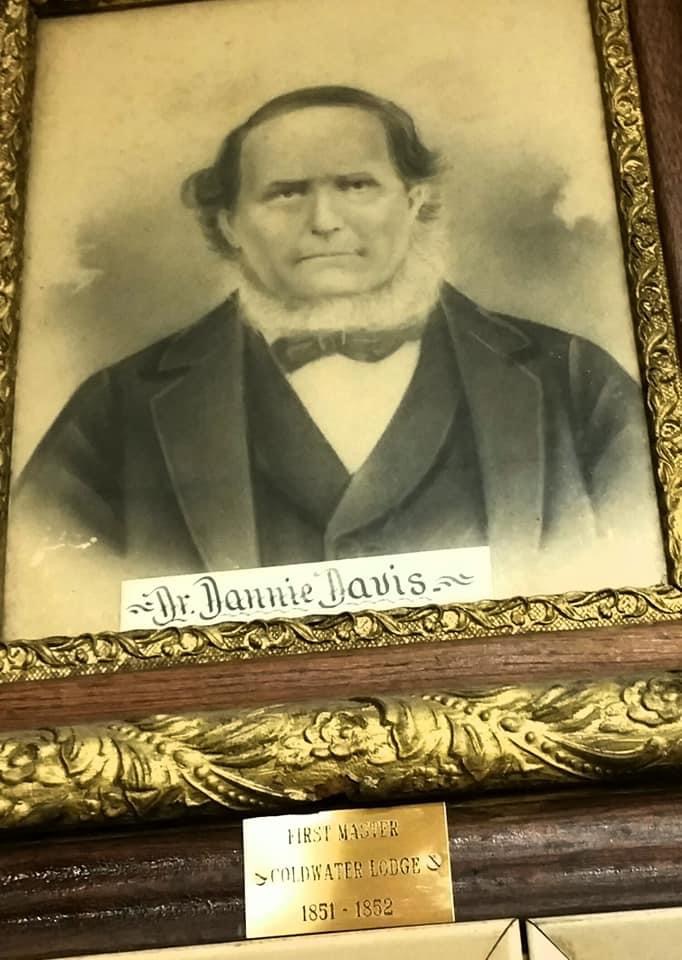
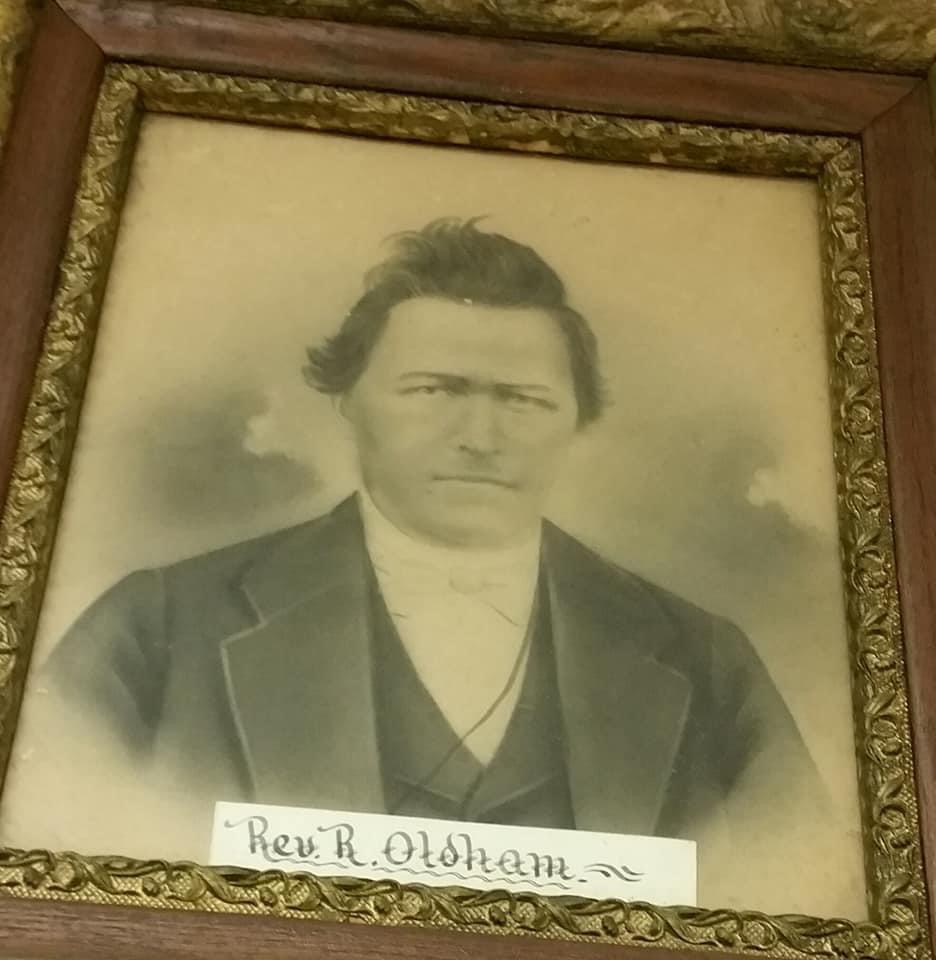
It seems that Mr. Robert Oldham donated one quarter of an acre of land for the site of the building. With the money donated from the lodge and financial aid from the community, a two-story building was erected. The first floor was used for the Academy and the second floor for Lodge meetings.
It has been suggested that the below photo was the original two story building.

The exact date of the opening of the Academy is not available, but it is assumed it was in operation in the spring of 1852. Students other than those from Green Pond and Woodstock attended the Academy and the dormitory was being built near the school to take care of them. The number of years that the dormitory was in use is not known.
The Reverend William Wilson Moore, descendent of James Smith who signed the Declaration of Independence, was the principal in 1854. The Reverend Moore was also a Presbyterian minister. In 1864 to 1865 Rev. Moore served as a chaplain in the Confederate Army. No record of school for those years has been located.
In the year 1876 Professor A. W. Hayes, [Andrew Wilson Hayes] a nephew and former student of the Reverend Moore became principal and remained so until he attended the University of Alabama. Hayes returned in the fall of 1884 and remained there until 1886.
The Academy burned in December 1885 and Professor Hayes converted an old store on Sharp’s [?] Hill near Green Pond into a school. The 1885 – 1886 school term was completed here. Professor Hayes left Bibb County and taught with Professor Morgan at Elyton near Birmingham, Alabama in 1876 and 1887.
The Woodstock Academy 1887-1900
The site selected for the Woodstock Academy was midway between Green Pond and Woodstock. The building construction was started in the summer of 1887 and was first called Midway Academy because of its location. When the application for charter was presented to the legislature in Montgomery in February of 1889, it was learned that there was another Midway Academy in Alabama. The school was incorporated as the Woodstock Academy on February 28, 1889.
Professor A. W. Hayes, father of Misses Hattie and Andrea Hayes and Mrs. Mary Pratt, was founder of the Woodstock Academy. He was the principal from 1887 to 1898 but because of ill health he did not teach for the next two years. J. M. Ellenburg and Henry Jolly were principals during that time.
Professor Hayes returned to the school in 1900 at which time it became a public school. He continued as principal of the public school until 1908, when he became the Bibb County Superintendent of Education, a position he held until 1913. He died in 1945.

There were three departments in the Woodstock Academy, the High School, the Intermediate, and the Primary. Music was also taught.
Mr. W. A. Stewart, West Blocton, Alabama and father of Mrs. Elaine Henderson, a teacher of the Woodstock School at the present time, was a high school student of Professor A. W. Hayes. He tells us that the cost of the high school tuition with room and board was $8.00 per month. Mr. Stewart boarded with Professor Hayes and his family.
The Woodstock Academy Becomes a Public School in 1900
In 1990 Professor Hayes returned to the school after a two-year absence because of ill health. At this time Professor Hayes gave as a gift to the Alabama State Department of Education the Woodstock Academy and 5 acres of land. The school became a public school and was called the Woodstock-Green Pond School. Professor Hayes was principal of the school until his appointment to the office of the Superintendent of Education of Bibb County in 1908. This school served until 1936 when the present school was built.

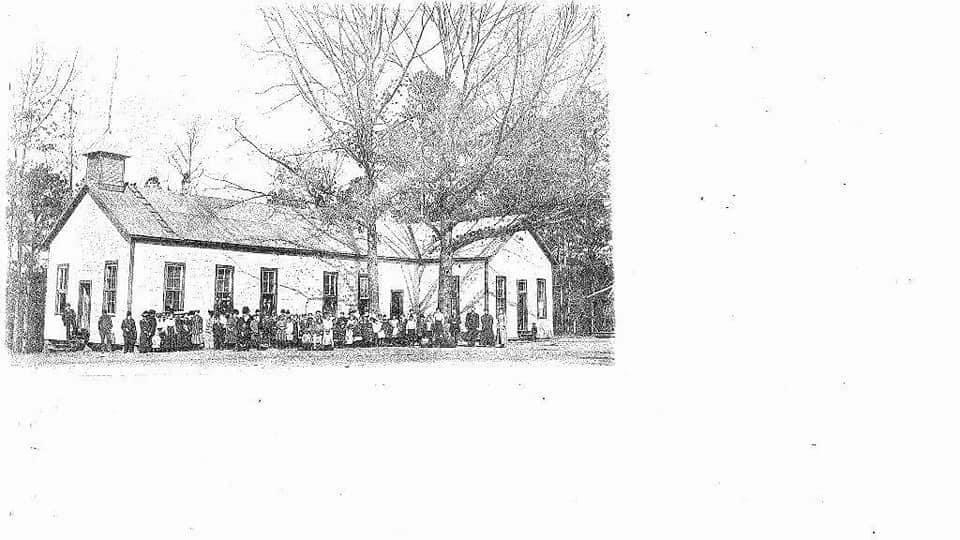
Below are listed the teachers from 1909 to 1928 as far as records are available
| TERM | PRINCIPAL | TEACHERS |
| 1909-1910 | Reverend J.B. Stovall | Miss Lou Hayes, Miss Lillian Copeland |
| 1910-1911 | Reverend J.B. Stovall | Miss Lou Hayes, Miss Lillian Copeland |
| 1911-1912 | Reverend J.B. Stovall | Miss Lillian Copeland, Miss Jessie Oglesby |
| 1912-1913 | Reverend J.B. Stovall | Miss Hart, Miss Jesse Oglesby |
| 1913-1914 | Reverend J.B. Stovall | Miss Eunice MvDonald, Miss Pearl Carroll, Miss Jessie Oglesby |
| 1914-1915 | Not Recorded | Miss Lou Hayes, Miss Jessie Oglesby |
| 1915-1916 | Mr. Isaiah Lewis | Miss Lou Hayes, Miss Jessie Oglesby |
| 1916-1917 | Mr. Isaiah Lewis | Miss Lou Hayes, Miss Jessie Oglesby |
| 1917-1918 | Mr. Isaiah Lewis resigned, Professor Hayes finished the term | Miss Pearl Carroll, Miss Jessie Oglesby |
| 1918-1919 | Miss Nella Carroll | Miss Pearl Carroll, Miss Jessie Oglesby resigned and Miss Daisy Carroll finished the term |
| 1919-1920 | Miss Pearl Carroll | Miss Ellie Haley Miss Lois Hayes |
| 1920-1921 | No Record | No Record |
| 1921-1922 | Mr. J. W. Cleveland | Mrs. J. W. Cleveland |
| 1922-1923 | Mr. J. W. Cleveland | Mrs. J. W. Cleveland |
| 1923-1924 | No Record | No Record |
| 1924-1925 | No Record | No Record |
| 1925-1926 | Mr. C. W. Reeves | Miss Annie Mae Boggus, Miss Rubye Herring, Miss Laura V. Ray |
| 1926-1927 | Mr. C. W. Reeves | Miss Annie Mae Boggus, Miss Jessie Dunlap, Miss Jessie Mae Reeves |
Mr. Francis Pratt, Superintendent of Education at the present time and son-in-law of the late Professor A.W. Hayes began teaching in the old school building in 1931. Teaching with him was Miss Emma Splawn, Miss Jean Israel, and Mrs. Ruby Herring Skelton.
In 1932 to 1933 Miss Blanche Holsombeck joined the above faculty and took the place of Mrs. Skelton. The same faculty served the next year 1933 to 1934. Mr. Wayne Holman was principal of the school that year, which was the last year in the old building.
The year 1936 to 1937 is a memorable one for it was this year that a new building was completed and the school taught in for the first time. Principal at this time was Professor B.E. Lee, his teachers were Miss Jean Israel, Ruby Sansing, Hattie Hayes and Miss Blanche Holsombeck.
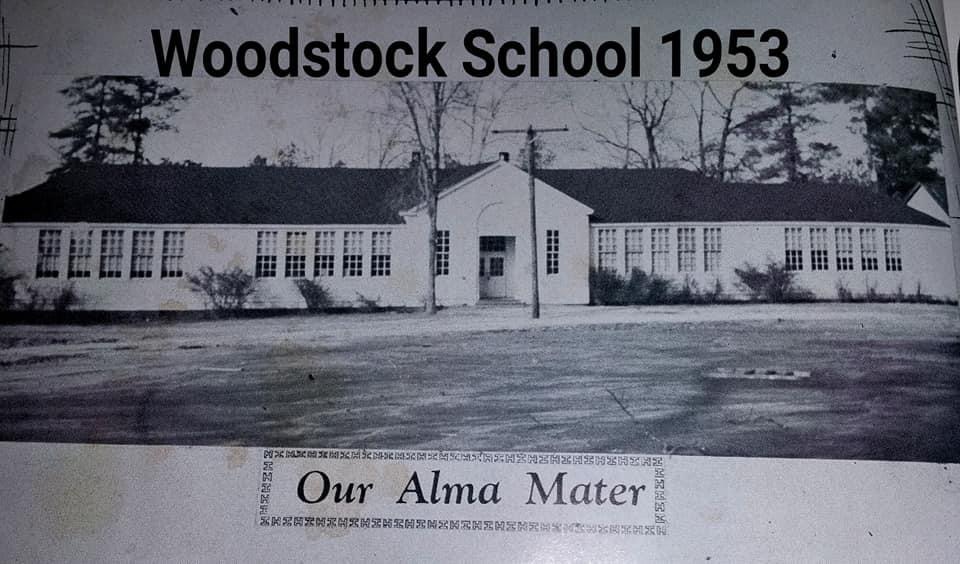
Mr. Thomas Burns, who is principal of the school at present, entered the school in first grade in the year before the second grade in the new building; his teacher was Mrs. Blanche Holdsombeck, who is also teaching school here now.
Professor Lee passed away in the fall of 1937, and his daughter, Miss Ruby Hodge took over his duties and remained principal until 1941.
The next few years were hectic war years and wrought many changes in the faculty.
Most of the present teachers have been here for many years. Mrs. Estelle Johnson has been a member of the faculty for 19 years, three of those years as principal. Mrs. Blanche Holsemback, 21 years, Mrs. Thomas Burns, 12 years years teacher and 1 year as principal, Mrs. Elaine Henderson, teacher for 10 years. Miss Henderson came to Woodstock as 4th and 5th grade teacher but when Miss Iva Thrasher, who had taught 1st grade for 12 years passed away, Mrs. Henderson filled in the vacancy.
Mr. Fred Hubbard, principal of the Eoline [Exoline?] School taught at Woodstock before Miss Virginia Caffee came to the fourth grade. She has been here three years.
The School Today
An elementary school must drive to present a program of education that will develop the many sided character of a pupil. The curriculum that we have incorporated is planned to do just that. We also have many other services that supplement the program of instruction. Among these are the audio-visual aids, and a splendid centralized library service library, staffed by a competent librarian, Mrs. Ed Lewis, [Christine Lewis later became the principal] and assistant Mrs. Ed Nelson.
The television is used quite effectively, teaching Alabama history, math and music. The overhead projector is very useful audio-visual aid in all phases of teaching. The movie projector, with a well supported variety of free films, the film strip projector with film strip and slides, also supplement the program of Instruction.
Arts and crafts are taught in collaboration with the other subjects. Specific emphasis is placed on science and provided with science film strips and slides, special equipment, and projects for a broader knowledge of the subject. Speech is intertwined through the use of the tape recorder and TV.
The school plant itself has Improved. A new modern lunchroom, fully equipped, has been added in the last few years. The steam table affords the children hot lunch each day. Each room is supplied with fluorescent lighting and a wide variety of teaching aids to supplement the textbooks. A highlighted hall filled with a concession stand and speakers booth is under construction and near completion.
Credit should be given to the parents who work so cooperatively with the teachers in making our school a better learning environment for boys and girls. We would like to thank Mrs. Pearl Holsomback and Mrs. Alice Meigs for information and dates, etc.
Transcribed from handwritten records donated to the Woodstock Community Library in memory of Patricia Kinard Sellers, by her family. Please email corrections to library@townofwoodstockal.com.
Photos supplied by historian Vicki George Kes.












 Woodstock Community Library